Cosmic Conservative

Rational Conservatism from the heart of America

Reviews

Movie Review: Prince Caspian

By CosmicConservative
So we saw this at a matinee on Saturday after helping a friend move their furniture into their new garage. Monday we'll help them move it into the house (don't ask why it had to be done in two steps...) So I was actually pretty sore and a little sunburned while watching the movie and more than a little distracted because the movie had started late and we were all hungry. There is a major difference between the Narnia movies and movies like "Harry Potter" or "Lord of the Rings." That difference is that when you make a movie of Harry Potter or Lord of the Rings, you have to decide what huge chunks of the narrative you are going to have to leave out, knowing that you are not going to please many people by leaving ANYTHING out. The Narnia books are completely the opposite. They are short novels, almost novellas. For both of the first two movies there is very little actual narrative to work with, and what there is is terribly short of conflict or drama. CS Lewis did not like to write about battles, unlike Tolkien who dwells on massive battles and created massive panoramas of military conflict, or Rawlings who seems to enjoy writing about battles, but whose battle scenes are laughably inept and naive. Lewis would describe a major turning point of battle in a few sentences. The entire battle scene which was the climax of the first movie was no more than a couple of paragraphs in the book. The same is true for other parts of the story. So for a Narnia movie the question isn't about what to leave out instead it is more important to decide what to make up! There is precious little in a CS Lewis book that would make a good movie scene, much less a full two and a half hour movie. So to me watching these movies is like watching a new story, and the second one was virtually identical to the first in that regard. Most of the movie action was barely touched on on vaguely described in a paragraph here or there. Virtually all of the battle scenes are made up out of whole cloth, as is the pseudo-romance between Prince Caspian and Susan Pevensie. So don't expect a review to be some sort of comparison between the books and the movie, frankly if CS Lewis were to watch one of these movies, I'm pretty sure he'd be horrified by the violence in them. But as a movie judged on its own merits, it's a fun way to spend an afternoon. The CGi in the movie is top-notch. The "children" reprise the roles and each of them (except Peter) manage to pull of a performance that genuinely shows personal growth since the first movie. Peter somehow manages to come off as peevish, immature, impulsive and prone to envy and jealousy. This movie is much more overtly a "Christian" movie than the first one. The fundamental messages of faith, hope, redemption through God and personal responsibility for spiritual choices (a big point of Lewis's writing) are hammered home with authority. There are some excellent moments in the movie, especially with an obviously growing rivalry between Edmond and Peter. Edmond comes off rather well in this movie, which is good since he was essentially the goat in the first movie. Ben Barnes is a solid Prince Caspian, and his struggles with his heritage, his own dark impulses and his downright cute schoolboy crush on Susan Pevensie is all rolled up together into a very tight characterization (if you overlook an oddly out of place Spanish lilt to his delivery). (Short side note: If you are a fan of "The Princess Bride" and you get to the "You killed my father scene" you are surely going to see a bit of Inego Montoya in that scene instead of the more commonly inferred Luke Skywalker. Frankly the Inego Montoya connection does more justice to the role.) The basic plot of the movie is that Narnia, once ruled by the benevolent Kings and Queens (the Pevensies, of course) was overrun by the wicked Telmenorians (not sure of spelling or pronunciation of that, and evil wicked humans of course) who have attempted to exterminate every trace of the old denizens of Narnia. Having more or less run the Narnians off, the Telmenorians devolve into palace intrigue, murder and regicide. Prince Caspian (the Ninth) is the true heir to the throne, but his uncle has been acting as Regent since the odd death of his father, King Caspian (the Eighth). Driven from the Telmenorian castle upon the birth of his uncle's son, Prince Caspian blows a magic horn to summon the true Kings and Queens of Narnia, which is where the Pevensies get back into the action. Of course there's the obligatory unbelievable battle sequences, but this time punctuated with some truly clever tactics that Edmond employs, all to naught unfortunately as the Narnians get their tails kicked in their first real battle against the Telmenorians, a defeat that is cause for strife between Peter, who failed to call for retreat in time, and Prince Caspian, who succumbed to a desire for revenge and failed to open the gates in time. It was a nice touch, and I don't recall any such battle in the book, but it must have been quite a shock to a lot of people watching the movie to see the heroes actually get whupped in a movie of this sort. But of course, Aslan saves them in the climactic final battle scene. What else is Aslan for? Since I don't want to get into a discussion of what I don't like about Lewis's books (or theology) I'll just say that the ending is as implausible and illogical as any such movie, but that's not the point of such movies. I would say this movie was better in every regard than the first one, and I liked the first one. I really liked some of the acting (Tilda Swenson's reprise as the Ice Queen upstaged everyone else in the movie). I didn't care much for the Shrek rip-off characters, but then I never really did go for cutesy-pie stuff even in cutesy-pie movies. But it is bearable and provided some nice comedic moments. Cosmic says check it out.

Book Review: Manhunt

By Dadman
This book by James Swanson is simply a kick-ass good read about the 12-day manhunt that followed the assassination of President Lincoln. It's representative of a new approach to documenting history that is best described as dramatic narrative non-fiction. It's not dramatized or fictionalized history, similar to what Newt Gingrich has been publishing of late, but rather a dramatic telling of actual events that relies exclusively on the historical record to drive the story. As such, Manhunt is a compelling page turner that reads like a novel while providing sumptuous detail and nuance of this brutal, tragic event and the ensuing manhunt that riveted a stunned nation. Another excellent example of this type of non-fiction narrative is The Devil in the White City by Erik Larson about the events surrounding the 1893 Chicago World's Fair. Devil is one of the most entertaining books I have ever read. But, back to Manhunt. Most of us know that John Wilkes Booth assassinated Abraham Lincoln on the night of April 14th, 1865 as he sat in Ford's Theater enjoying a performance of Our American Cousin. But how many of us know what Booth did earlier that day to prepare the Presidential box for the dastardly deed? Do we know what Lincoln's frame of mind was on the day he was shot? Do we know what kind of gun Booth used and why it is significant? Do we know what Laura Keene, star of Our American Cousin, did to take personal advantage of the tragic, historic moment? Do we know how long Lincoln lived after the mortal head shot? Are we aware of the details of the struggle between Lewis Powell and Secretary of State Seward on that same fateful night? Do we know why Dr. Samuel Mudd helped Booth and Herold shortly after the assassination. Do we know who else, in addition to Dr. Mudd, helped Booth flee south into Virginia? These and many more questions are answered in Swanson's book. It is packed with fascinating details derived from court transcripts, witness depositions, letters, journals, etc. woven into a narrative that is no less compelling today than it was to a stunned and shattered nation in 1865. I highly recommend it.

Movie Review: Iron Man

By CosmicConservative
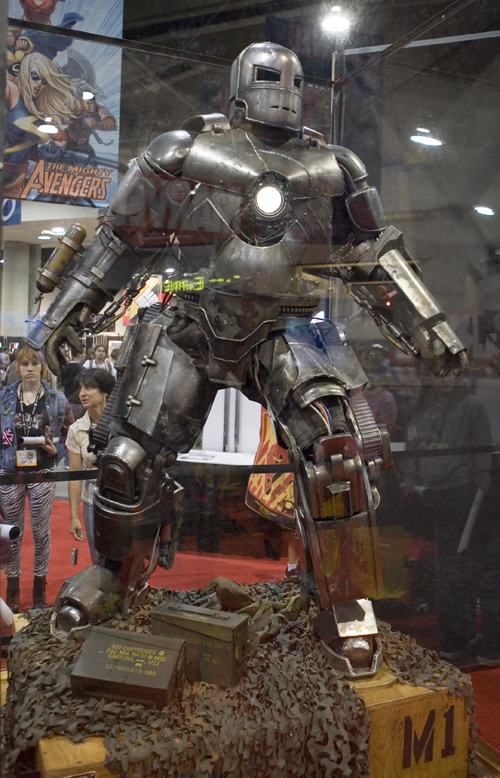
I guess my complete geekiness shows quite a bit in movie reviews. I definitely tend to like the computer graphic extravaganzas. I guess I am just a fantasy and science fiction fan at heart, and comic book heroes have always been a sort of mix between the two. Marvel comics hit upon a very successful formula back in the fifties and sixties. They pioneered the "flawed hero" concept and virtually all of their heroes lived lives that were more like a soap opera than an action movie. Peter Parker was the picked-upon nerdy science geek, Thor's alter ego was a gimpy physician and Dr. Strange had suffered nerve damage that rendered his once miraculous hands incapable of the fine motor skills needed for surgery. But perhaps the most flawed of all heroes was Tony Stark. In the original comic Tony Stark was a boozy millionaire with a bad heart. He made his millions by inventing and selling weapons to the U.S. and our allies. When told by his doctors that he would have to live the rest of his life in a medical device that kept his ailing heart alive, Tony decided to create a portable version of the device, and that was how "Iron Man" was born. The movie doesn't quite follow that same story line, but it's not long before the movie version of Tony Stark is also dealing with a lifetime of poor personal decisions and a bad heart of his own. The inspiration for the movie's Iron suit was not a bad heart though, instead it was more of a "ripped from the headlines" story line. There's a lot to say about this movie, so let me break things up, then I'll summarize at the end. First the movie's direction seemed just a bit off. At times it felt choppy and discontinuous. It was sometimes hard to tell if a day or two had passed, or a month or two. The pacing was off-kilter. When it needed to zig, it would zag. When it needed to speed up, it would slow down, and when it did speed up, it went supersonic in a heartbeat. I'd give the direction maybe a B-. And I'm being generous. The final battle sequence was true comic-book computer generated awesomeness, but the lead up was very weak and hard to believe. The writing was much better. There were some clever moments and some funny bits. The dialog was not brilliant but it avoided many of the sorts of cliches that these sorts of morality plays can fall into. I think the movie will be a sort of Rorschach test of people's politics. I would expect that most hard-core conservatives will find the message of the final half of the movie to be objectionable, and most hard-core liberals will find the message of the first half to be so. I'm not saying it walked a fine line, overall it definitely took a liberal slant, but it could have been far worse. Yes the bad guys were a combination of some sort of mongol warlord and an evil corporate greedhead, because Hollywood just isn't going to make a movie with evil Islamic terrorists because that just doesn't fit the narrative. But on the other hand, the first half of the movie portrays terrorists of some indeterminate bent as pure evil bent on domination of, at least, Asia and the Middle East. And I would not be surprised if the majority of the movie-goers do not catch the mongol references and come away with the belief that the bad guys are just Al Qada terrorists. After all, they are in Afghanistan. And yes, I do get tired of the evil corporate greedheads in $5,000 suits storyline, but you know what? There are actually evil corporate greedheads in $5,000 suits, one pretty much wiped out my retirement and savings about ten years ago, so I'm OK with the evil in the movie being a combination of the two. Overall I give the writing a B (mostly because the Tony Stark/Pepper Potts dialog offset the disappointing leadup to the "Iron Monger" of the final battle scene). The acting was very good. Robert Downey Jr. was superb, as he usually is. Jeff Bridges was less compelling, but pulled off the smarmy corporate fat cat pretty well. He just smacks his lips too much. Ug. Gwyneth Paltrow does an admirable job as "Pepper Potts", Tony's girl Friday and closest (platonic) companion. The chemistry between her and Downy is surprisingly understated and the dialog between the two was some of the best dialog in this (or any other comic book) movie. These are two supremely confident adults sparring with some dialog reminiscent of when movies used to actually do romance with subtlety and wit. My only beef with the acting was with Jeff Bridges, and to be fair it may be more the direction and the script that are to blame. The implausible path that his character takes through the movie must have felt to Bridges like he was portraying a man with multiple identity disorder. It felt forced at times. Otherwise the acting was excellent, with a nod towards a very earnest and conflicted turn as Stark's military liaison by Terrence Howard. Overall the acting gets an A. The look and feel of the movie, whether it was the cinematic shots of ruggedly beautiful country, or the shots of L.A. at night, or the lavish scenes of decadent high society, all were beautifully done and will never get the credit they deserve because they were so overwhelmingly overshadowed by the special effects. In many ways Iron Man's suit IS Iron Man, and the suit was pure techno-geek awesomeness. Iron Man may be the most accessible "super hero" of them all to geek-types. We all know that we're not going to get bit by a radioactive (or genetically enhanced) spider, we weren't born mutants with special powers, we didn't come to this planet from another world, and we are DANG sure not going to spend a decade learning to fight from Tibetan monks, so what all of us need, what all of us can see ourselves doing, is climbing into a ready-made super suit where all we need to do is let the suit do all the cool stuff while we are along for the ride. That's the beauty of Iron Man. We are ALL Iron Man, all we need is our own dang SUIT! The special effects wizardry sold me on the suit, all except one brief scene. Otherwise it was completely believable that a suit of titanium-iridium alloy (it's not really iron) could turn a guy with a bad heart and a (probably) bad liver into a super-hero who can catch falling automobiles, and outfly two F-22 Raptors. I have to give the movie an A+ for this. In summary I think the movie deserves at least an A-. It was a very enjoyable movie, with lots of action and lots of great non-action scenes with some of the most well-written dialog I've seen in any comic book movie. If this is the result of Marvel's first self-funded movie, I want to see them make more. This one ought to make them a ton of money.

Car Review: Yaris driving report

By CosmicConservative
So, I've spent almost all of the content on my new car posts talking about the financial aspect of the improved gas mileage. Now that I've driven my new Yaris over a hundred miles, I feel qualified to report on how it drives. Frankly, I was surprised by how much I enjoy driving it. I had test-driven it up a fairly representative mountain road called "Deer Creek Canyon" before purchasing it, so I had already formed an opinion of its handling and responsiveness, but it's different to drive one that you own instead of driving one you are thinking about owning. The Yaris only has a 105hp engine. A standard 2008 Chevrolet Impala, for comparison, has 211, or almost exactly twice as much. On the other hand, a Chevy Impala weighs about 3,600 pounds and a Toyota Yaris weighs about 2,300 pounds. So the weight/hp ratio of the Yaris is about 22 pounds/hp and the Impala is about 17 pounds/hp, a difference of 30%. Which should translate into a difference of 30% in things like acceleration or top speed. And that may in fact be the case. All I know is that the Yaris feels peppier and handles the hills between work and home much more easily than my Pathfinder did. At two places on the trip up into the mountains on my way home, my Pathfinder was incapable of speeding. In fact I could not keep it at 55 mph without red-lining the tachometer in third gear. The Yaris has no problem in those two stretches, although you do have to give it some gas, but that's also true of our Audi and Subaru. The Yaris is definitely a small car. A "sub-compact" I think is the term reserved for such vehicles. It looks like a toy in our garage (our garage can hold a medium sized RV). But the front seats are surprisingly roomy. The back seats are definitely cramped though. But the front seats do not feel like a small car. Also the driver sits fairly high compared to other subcompacts. I have about the same driving position and perspective in the Yaris as I did in the Pathfinder. In some sub-compacts you are so close to the ground that it can get quite intimidating in regular traffic. I have not noticed anything of the sort in the Yaris. The bulging thorax look of the car may make people giggle, but it provides ample headroom. I don't get any feeling of claustraphobia while in the car. It "feels" like a bigger car. the steering wheel is well placed, if slightly smaller than I would like, and the seat controls are easy to reach and work well. There is also ample elbow room. The dashboard and controls are well designed. Frankly they are much better thought out than our Audi A4, whose design seems to have been more concerned with "looking sleek" while the Yaris seems more concerned with "practical functionality." Case in point, the cup holders. The Audi A4 has a single cup holder in the middle of the dashboard, that apparently was designed to hold nothing but demitasse cups. Anything larger will tip over, spilling content everywhere. Even a standard sized soda can is barely held in place. The other cup holders for the Audi are set one behind the other in the center console between the front seats. This arrangement makes it virtually impossible for you to drive and drink anything. If you are not grabbing at a teetering bottle in the dashboard, you are reaching around your right hip to try and wrangle a cup out of the console. The Yaris has two pull-out cup holders on the extreme edge of the dash, one for the driver and one for the passenger. It also has a cup holder built into the bottom of each door. Both are designed to hold tall drinking cups or bottles without spillage, and they are robust (especially compared with the Audi, whose cupholder was designed for dainty society types I guess). All of the control knobs on the dash are large and well labeled. The environment and radio controls are set in the middle of the dash where both the driver and the passenger have easy access to them. The speedometer and other dials are set on the extreme top of the middle of the dashboard instead of tucked under the steering wheel. This is a little odd and takes some getting used to, but the benefit of not having to look down towards your feet while driving is fairly obvious. A quick glance does not even require taking your eyes off the road in front of you. Basically it's a well thought out design for the driver and one passenger. The back seats are no doubt cramped and uncomfortable for medium to large sized folks. As a two-door, it is a bit difficult to get into the back seats. It's not really designed for long periods of travel with four or five (it technically seats five) people. On the road it is surprisingly fun to drive. It "sits" down on the road well, even on the mountain curves I took it through. It does not feel like a "small car" while you are driving it. It accelerates smoothly and responds quickly when you punch the gas. It's not going to win any races, but it doesn't get left behind at a traffic light either. It drives well. Driving on the winding mountain roads, it is actually a pleasure to drive. I thoroughly enjoy it so far.

Game Review: D&D 4e

By CosmicConservative
Well, I promised a review of the latest release of Dungeons and Dragons from Wizards of the Coast. Today I played in a four hour session that took us through three encounters with various NPCs. It's different. Very different. I knew from the hints and excerpts that had been released on the message boards that it was going to be different, and I had mentally prepared myself for it to be more or less an entirely new experience. My main goal in going to the "demo" game in the first place was to get some idea if I was going to enjoy it enough to keep moving forward with the game, or stick with the version I already knew and enjoyed. The game was started after six players gathered around the table and the Wizards-sanctioned GM (Game Master) sat at the table, complete with a "D&D 4E" hat on. After a short round of introductions, we listened while the GM gave us (and the crowd of about a dozen interested non-players who were watching the game) a description of some of the major differences between the existing game, and the new version. This took a fair amount of time because of the questions that were asked, many coming from the people standing around the table. The players, including me, were itching to get into the game. Next the GM handed out a sheet of 4e highlights which described in a short paragraph or two the basic game mechanics. I don't think I'm supposed to republish them here, so I'll just say that the attempts to simplify the game were apparent in many areas. This has been an ongoing trend with the game, every release attempts to simplify the basic mechanics more than the previous release, with varying degrees of success. Reading through the description it seemed that some of it would be quite clearly an improvement, while other aspects seemed to oversimplify things too much and another set were just strange and would need to be played to figure them out. Basically the game is still turn-based and each player's turn is broken down into three actions, each of which can only be taken once (with some caveats). Those are as follows: 1. Standard Action: This is basically the same as older versions of the game. This is where a player character does the basic activity of their turn, such as opening a chest, casting a spell, firing a weapon, or taking a swing at an opponent. This is the "highest level" of the three actions. 2. Move Action: This is also basically the same as the older versions of the game. As it sounds this action is basically an action where a character is repositioned according to the limitations they have in their ability to move. Movement is now square based but this is an area they have simplified to the extreme. On a square grid you can now move in any direction as many squares as your character can move in one move action, regardless of whether you are moving vertically, horizontally or diagonally. In the old rules diagonal moves cost more than vertical or horizontal moves, but apparently the math and geometry-challenged players or game designers felt that this was too complicated for today's game players to manage. My personal opinion is that if they wanted to make it this simple, they should have gone with a hexagonal grid instead of a square one. That way the movement is more or less realistic, where with the square based grids moving diagonally you move roughly 1.4 times as far as moving horizontally or diagonally. This sacrifice of common sense to the pursuit of simplicity just bugs me on so many levels that I can't even go into it. 3. Minor Action: In the old rules there were a variety of "minor actions" ranging from a free action to a swift action. Each had its own rules. I actually like this modification, because in the old rules it was sometimes difficult to determine what combinations of major and minor move actions could be legitimately attempted in one turn. Also a "standard action" can be replaced by either of the two "lower" actions, and a "move action" can be replaced by a "minor action." Which means that a character could do three minor actions if they preferred, and that would fill their turn, or two move actions and a minor action. Next the GM handed out a set of pre-created characters, and we worked out which character we would play. I ended up playing a "Ranger" which is intended to be a sort of outdoorsy combat specialist who favors ranged weapons over melee ones. The sheet was one page, front and back, and listed all of the possible actions the Ranger could take. It also listed the Ranger's attributes, most of which were either the same as, or comparable to older versions. For example, each character is still based around the venerable attribute scores of Strength, Dexterity, Constitution, Intelligence, Wisdom and Charisma. A new twist on the character sheets was the breakdown of the character's abilities. Some abilities were "at will" meaning they could be used at any time by the character. Others were "per encounter" meaning they were limited to a finite number of uses during an encounter (all were "1 per encounter" uses). And each character had at least one "per day" ability, again, all of the characters were limited in their daily abilities to a "once per day" use. Basically an "encounter" is any set of activities that happens between "short rests" of at least five game minutes, and a "day" is any set of activities that happen between "long rests" of at least six hours. Short rests reset "per encounter" abilities and long rests reset "per day" abilities. Simple enough, but this was definitely new. With that we began to play the game. The GM explained that our group of adventurers was more or less on the outs with the local authorities, and had been hired to deliver a sealed scroll to a local merchant in the town. We were all cooling our heels in the local tavern waiting for the merchant to signal that it was safe for us to approach him, when he would give us the remaining half of our fee for delivering the scroll, and we could then be on our way. Of course that's not what happened. The merchant was suddenly approached by a group of men dressed as village guards and a man in robes carrying a staff. The GM announced that this group of men was demanding that the merchant (who had our fee still) surrender to them, then announced that we needed to "roll for initiative" which is the time-honored signal for the beginning of an "encounter." Our wizard won the initiative and his first action was to attempt to put the oncoming party of "guards" to sleep with his "once per day" ability. He was partially successful as four of the six dropped to the ground. The rest of our group, figuring that the guards would not appreciate having been the target of a spell, decided our best course of action was to hit them first and hard before they could attack us. D&D is described as a "role playing game" and in the early days, it was considered to be something of an insult to call someone a "roll player" meaning that they were more interested in the tactical aspects of the encounters and all the ways to roll dice to beat up their opponents. With each release of the game "roll playing" has been elevated until it was roughly equal to "role playing" in 3.5. In this release the attention to "roll playing" has been such that the "roll playing" now seems to be more central to the game than the "role playing." This was evident in our first battle as the game mechanics dictated virtually all of the actions. Now, that's not entirely a bad thing. In fact it may not be a bad thing at all. The increasing importance of "roll playing" in the game has always been to decrease the unpleasantness of having GMs and players argue about such things as whether a target is within range, has some sort of cover or is or is not vulnerable to a particular approach. For that reason it is imperative in today's gaming community that the game mechanics drive the action in a smooth, predictable and decisive manner. This, in fact, was one of the things that I was most interested in checking out by playing in the demo game. The first encounter was not smooth. But that was more due to the players' attempts to play the game as if it were still under the old rules, and our unfamiliarity with our own characters' abilities. In fact in that first encounter even the GM misunderstood a fairly basic rule around my (and our warlock's) basic use of our main minor action. But the encounter proceeded briskly even with those minor confusions. And soon we had defeated the "guards" and my character was tying up the leader for questioning. But at that moment the remaining sleeping "guard" awakened and began yelling for help from the real town guards. My character barely had time to snatch a curious dagger from the leader before we were forced to flee an oncoming phalanx of actual guards. Now this is important. In the older versions of D&D the rules around melee or ranged combat have always been fairly well done, well enough to satisfy millions of fans anyway. But one area that has always been "broken" has been such things as having a group of player characters attempt to flee from, or pursue a group of non-player characters. The new version addresses this situation directly with a set of rules for determining the success or failure of group actions such as hiding, running, obstructing or sneaking. Our group attempted all of those things. The rules for such a situation seem to be that the players' group needs to be successful in four attempts at such group actions before they fail at four attempts. Success means they achieve their objective (whether that is hiding, fleeing or obstructing, for example). Failure does not mean that they are captured, but it means something negative happens. We failed four times and succeeded three times. The GM ruled that the outcome of the activity was that we successfully evaded capture, but not before the guards had seen us well enough to identify us later. I have mixed feelings about this though. At one point our party was running through a corn field and we managed to set the corn ablaze behind us as we ran, forcing the pursuing guards to either rush through the flames, or rush around them, either of which should have given us enough of an advantage that we could have escaped or hidden. But the GM simply ignored the flames and continued the pursuit as if they had never been set. This sort of arbitrary ignoring of physical reality by a GM always bothers me, but I don't think that is a flaw in the new rules, I just think the GM was not being realistic and did not consider the likely actual reaction of a group of men in armor rushing headlong into a burning corn field. You see this sort of thing a lot in GMs actually, no matter what version of the game you are playing. After a short rest, we continued on into our second encounter which was against a group of undead skeletons, including one which was aflame, and one which could explode bone fragments from its body doing serious damage for a wide area. This encounter led to the most significant rules debate of the session when our warlock used his daily ability against the exploding skeleton. The description of the ability said that with a successful hit, besides doing direct damage to the target, the warlock could "slide" the creature three squares. The question raised was whether the "slide" allowed the warlock to move the creature in any direction, or if it only moved directly away from the warlock. My position in the discussion was that other actions which caused the target to move directly away from the player character described the reaction as "pushed back", and so "slide" was either a simple wording error, or else was intended to mean a specific sort of action. And in fact "slide" IS a specific action and a "slide" can go in any direction. The GM finally ruled as I had hoped, and our warlock was able to push the exploding skeleton off a cliff, disposing of the greatest threat to the party. We quickly mopped up the rest of the undead combatants. During that battle we almost lost two of our group. Our halfling paladin was set aflame and actully remained on fire for most of the encounter, leading to a lot of jokes at his expense. The halfling and our cleric both were brought to the brink of death multiple times, only to be brought back by other characters jeopardizing their own lives to save them. Until the warlock pushed the exploding one off the cliff, we were all convinced that we would be killed. The GM assured us that many other groups who played this demo did not survive this encounter. But we did, although it was a close thing. After that encounter the GM took pity on us and went around the table taking four of our group's character sheets and explaining in some detail how their abilities could be better utilized and made to work in synergy with the other characters' abilities. Unfortunately he had no suggestions for me since the Ranger seems to be a fairly simple character to play, and I had already used all of his abilities more or less as the GM would have suggested them to be used. Which sort of disappointed me because it implied that the Ranger was not as resourceful as the other characters. After that we took a full rest, recovered all of our abilities and hit points and went on our way where we had our final encounter, this one the GM said was the hardest of the three. Either our group is a fast learning group, or we got lucky in this encounter because it ended up being somewhat easier than the fight against the undead. Our opponents in this case were four human berserkers, an elf wizard and some sort of chain-weilding humanoid whose ability to attack multiple opponents was rechargable after use if the player (or GM in this case) rolled a six on a six-sided die. The GM rolled three sixes, recharging the ability three times. Even so the battle was relatively short and devoid of threats of total party destruction, and after we dispatched them all, we called it a day. So, my thoughts on the new game are: It's different. They have simplified some things that needed to be simplified, which makes the game better, but they also simplified some things that did NOT need to be simplified, which makes the game worse. I thought I would dislike the new mechanism of developing character abilities. Actually I sort of like the new mechanism. The daily, encounter and at will approach was surprisingly effective, both in terms of using them in battle, and in terms of keeping track of what your character can do. In the old rules it is not at all uncommon for the player of a spell-casting character to spend several minutes contemplating what to do before actually committing to a single action. From a game play dynamic, this is very bad because it slows down the game and causes other players to get bored. And bored people get up and walk around, which means when the slow player finally makes up their mind, someone has to go hunt down the next player so the game can continue. Such things sometimes take up a large fraction of an encounter. With the new approach that was not really a problem. In four hours we had three significant encounters and this was our group's FIRST TIME to use the new rules, so there was significant loss of time asking questions just due to our inexperience. My feeling is that the new rules move much quicker than the old rules, which is a very good thing in my mind. Other than the oversimplification of movement, distance and area of effect spells, the main concern I have with the new rules is one that may only be true of this demo, and that is the lack of "buffing". In the old rules a clever player can gain tremendous tactical advantages in an encounter through the judicious application of spells or effects which enhance certain attributes or abilities. I am a big fan of this because it makes the encounters more than a hack and slash exercise. I enjoy the contemplation of tactics and strategies that frequently can mean the difference between success and failure based on careful analysis of the situation and proper utilization of magic or effects. This is one of the main areas I feel that smarter, more experienced players have an advantage over dumber or less experienced ones. There was basically none of that in this session. I hope that is not true of the entire game. I'll find out when the new books come. The most important question of all, and the one I went to answer, was whether the new rules were worth the effort to move to them. Overall I was left with enough of a positive reaction that I am willing to give it a try. I can't say I am overly enthusiastic, but overall I was pleased with the results. The bottom line is that it was a fun session.

Book Review: Titan

By CosmicConservative
by John Varley I guess this is a pretty old book. The copyright date on it is 1979. Somehow I never got around to reading it. Hmm.... It's sci-fi, by the way, so you might want to skip down to the Daily 'Toon if you're not into sci-fi. Since the book is almost 30 years old, I guess I can talk about it without worrying about spoilers. I'm not sure why I picked this up. Perhaps the blurb on the back saying that John Varley was a Hugo and Nebula award winner was enough to get my attention. Then all the review snippets talking about how this was the next big thing in sci-fi probably had an impact too. My reaction after reading the book? "meh." It's a decent read, but nothing special. The fundamental story may have seemed unique and original to readers 30 years ago, but it comes across as tired and derivative to me. And I don't mean derivative of things from the last 30 years, I mean derivative of things like "2001 A Space Odyssey" or "The Wizard of Oz" even. Basically the story is about a spaceship with a crew of seven sometime in the late 21st century which is exploring the Saturnian system. To make along story short, they discover an artifact in orbit around Saturn, but it's a huge artifact, with the "lowest albedo in the Solar System" to explain why it hasn't been detected by earth or by probe for 300 years. But it's HUGE, like 3,000 kilometers wide or so. I guess the author never considered that the thing would have had to cross Saturn's brightly lit face every month or so, making it clearly visible even to backyard astronomers like me. But that's perhaps being a bit too picky... The artifact captures the spaceship and kidnaps the crew. The spaceship is destroyed and the crew is put through a disturbing "rebirth" scenario before being expunged into the artifact where they become explorers in a strange new world. The artifact is basically a huge torus with spokes leading from the inside of the torus to the hub. The now ship-less crew begin an odyssey (did I leave out "The Odyssey" in my derivative comment?) to try to figure out how to find the artifact's builders and discover why they were captured, and figure out how to get back to earth. But there's a lot of problems. One is that everyone in the crew except the protagonist, Captain Cirocco Jones, suffered severe mental damage in the rebirth process. Some have gone entirely insane. Others are just messed up. But not Cirocco. She's tough. After slogging through a lot of gratuitous sex and seriously disturbing sexual imagery of alien beings for a couple hundred pages of contrived conflict, Cirocco ("Rocky") and her new lesbian lover "Gaby" eventually reach the hub where they discover the incredible secret of the artifact. A secret that you will probably figure out by page 30. There's a seriously lame Wizard of Oz moment and then a reconciliation between the Artifact's builder or builders and Rocky, who actually accepts a job offer from the being or beings who have kidnaped her, almost killed her several times, mentally raped her and her entire crew, leading to her and Gaby being physically raped etc... But all is forgiven because Rocky had the adventure she had been craving her whole life. I don't generally wish I had never read a book, but I may make an exception in this case. The premise is so lame, the execution is so heavy-handed, the graphic sexual content is so gratuitous and frankly disturbing that it really does feel like this was time I wish I could get back. In case someone else actually wants to read it, I won't spoil it by revealing the "big amazing revelation" of the end, but if you haven't figured it out by page thirty, you're not really trying. I guess the lesson is that you can't judge a book from it's back-cover blurbs...

Movie Review: 10,000 BC

By CosmicConservative
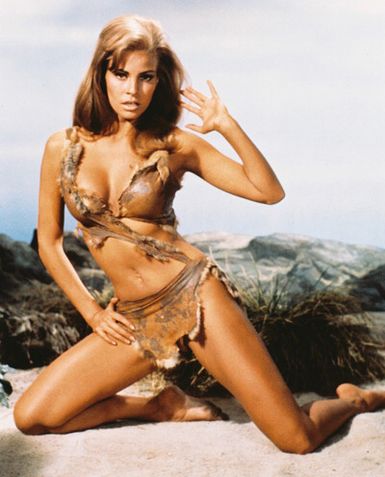
So I kept looking for Raquel Welch, and never saw her: raquel-welch.jpeg Oh well. I guess I was thinking about another movie... This movie was much different than either I or Mrs. Cosmic expected. She expected something more like "Clan of the Cave Bear" and I expected something more like "The Scorpion King." It was somewhere in the middle. The story is a bit strange and has some pretty significant problems both with historical accuracy and with basic ecology and zoology. But so what, it had some really cool CGI effects. The girl who played "Evolet" (Camilla Belle) bore a sometimes striking resemblance to Lindsey Lohan, although I would easily give her five times the sex appeal of Lindsey. There was nothing really remarkable about the rest of the cast except the remarkable resemblance of Tik-Tik (Cliff Curtis) to Frank Zappa. I kept waiting for him to pull out his zircon-encrusted tweasers... If I wanted to I could really torch this movie. It had some serious flaws. But I don't really feel like it because I didn't go to this movie expecting to see a great work of literary history. I figured it would be a bit of a lark, and I treated it that way. You could say it was a sort of neolithic Indiana Jones story. It was surprisingly slow in places. In fact in different parts of the movie it reminded me of nothing more than a Discovery channel documentary, but with really great CGI effects instead of the cheesy ones that Discovery Channel can afford. I'm not sure where it was filmed, but it looked like a surreal combination of New Zealand, Africa and South America. I'm pretty sure that there is nowhere on earth today that has the combination of tundra, desert, veldt and rainforest that our heroes trudged through on their tired and aching legs. It was an enjoyable couple of hours. If you want to just get out and escape for a while, you could do a lot worse. My only two nits to pick are as follows. First is an ideological one. Although the "bad guys" in the movie were clearly supposed to be early or precursor Egyptians, they somehow looked quite Caucasian, especially compared to every other race in the film. There is no doubt that the movie makers intended to reinforce the stereotype of white oppressors raiding and exploiting the rest of the world. I'm just a bit sick and tired of that frankly. The other nit is just how absurdly anachronistic so many things were. It was one thing to see a sabre-toothed tiger that was about twice as big as any actual fossil tiger, but the iron manacles they put on the prisoners complete with a lock and key were pretty hard to watch and not snicker a bit. But if you can get past Hollywood's idea of archeology, zoology, geography and history, you will probably enjoy it. BTW, the Iron Man trailor was pretty cool.

Book Review: Good Omens

By CosmicConservative
It turns out that the coworker I traveled with to go to Florida is a big book reader. She reminds me of me when I used to read several books a month. She still does. She also has some similar tastes to mine, including a taste for sci-fi, fantasy and techno-thrillers. We traded some book recommendations and I picked up two of her recommendations at the closest Barnes&Noble on the way back to the hotel one evening. The first of those to read is "Good Omens" written by Terry Pratchett and Neil Gaiman. These are two big names in fantasy/sci-fi these days but they wrote "Good Omens" a while ago. Supposedly it has become a "cult classic" which shows you just how much I am out of touch with the whole reading scene these days. I'd never even heard of it. The book has a very simply premise. The Bible is more or less correct about the universe. Armageddon is coming. In about a week. Actually much less than a week. The book is a satire, with a biting British sense of humor. In fact the book is so British that I had to puzzle out some references (what is an "ansaphone"?) to keep on reading the book. The "hook" in the book is that at the beginning of earth's history (about 6,000 years ago) the heavenly hosts and the hosts of hell left a representative from each side on the planet to more or less keep an eye on things to make sure their side was ready when the big final battle began. Neither side wanted to be caught off guard of course. The angelic representative, Aziraphel, and the demonic one, Mr. Crowley, after spending thousands of years living among the humans, go a little bit "native" so to speak. In fact they become something like cold war intelligence agents as they each maneuver to give their own side a bit of an edge in the outcome. But as sometimes happens with adversaries in such situations, they each secretly begin to respect the other and to view their antagonist as having more in common with them than their remote and aloof superiors. Hilarity ensues. The focal point of the end of the world is, of course, the anti-Christ. This is the "son of Satan" who will do battle with Jesus at Armageddon. But it's not quite that simple. In the book it is necessary for the son of Satan to also be born and live as a human, just as Jesus did. So the anti-Christ is part of a bit of baby-swapping that is done in the very first part of the book. Without spoiling the book, I'll just say that the gross incompetence of each of the two sides is part of the satire, so the baby-swapping does not go as smoothly as Satan would have liked. The end result of that misfire sets up most of the events of the rest of the book. It's hard to describe the book without giving away some of its better parts, so I won't do that. I'll just say that the satire is biting and clever and had me chuckling frequently and laughing out loud in a few parts. And that is high praise. I rarely laugh out loud at a book. If you want to just have a grand old time reading a book, and aren't easily offended by characterizations of God, Satan, the archangels and archdemons of the Bible, then I highly recommend this book. It's a lot of fun.

Book Review: Inkheart

By CosmicConservative
So I like to take a good solid book with me on a trip. I read pretty fast so I can go through most books in a cross-country flight. The Cosmic Daughter had been recommending the book "Ink Heart" for a while, so I borrowed it from her and read it on this trip. The book was written by Cornelia Funke, a German author who has developed a pretty solid reputation as a writer. I believe the book is in the process of being made into a major motion picture that will probably make a ton of money at the box office. The premise of the book is that a man exists who can bring books alive, pulling things and creatures from the book world into our human world. Obeying some sort of Law of Conservation of Karma, when things come into our world from the book, things from our world are also pulled INTO the book. The story does not have a single point of view, instead it bounces around the main characters' viewpoints. It starts with Meggie's point of view as she and Mortimer receive a late-night visit during a fierce summer storm from a strange man who calls himself "Dustfinger" and who calls Mortimer "Silvertongue." Dustfinger warns Mortimer that an old enemy of his, one named "Capricorn" is on his trail and is coming to take something that he wants from Mortimer. He suggests that Mortimer join him and simply bring the desired item to Capricorn to avoid any unpleasantness. Mortimer agrees to this and tells Dustfinger to come back the next day after Meggie gets out of school so he can take the item to Capricorn. Of course the next morning he attempts to flee, but Dustfinger is too clever and intercepts him. However, Silvertongue is persuasive and eventually Dustfinger agrees to flee with Mortimer and thus begins the adventure. At first we are led to believe that Capricorn is after a strange rare book, called "Inkheart" that is in Mortimer's possession. But it eventually becomes clear that Capricorn is truly after both the book and Mortimer because "Inkheart" is the book that Mortimer read both Capricorn and Dustfinger out of. Dustfinger's greatest desire is to return to his world, but Capricorn's greatest desire is to become as powerful in our world as he was in the Inkheart world. The book itself is named after Capricorn, whose character is described as being so evil that his heart is as black as ink. Of course there's a double meaning in the title, with the power Mortimer has to bring books to life, the hearts of Capricorn and Dustfinger were once, literally, hearts of ink. Printers ink. The story will probably translate well to the screen with all the fantastic creatures that are in the books within the book. Without giving too much away about the book, Mortimer is pursued by Capricorn all over Europe, where he is joined first by his missing wife's aunt (a book collector) and the actual author of the book, Inkheart. During the story Mortimer's ability to read things out of books is explored as both a blessing and a curse. The story has some very good characters, great action scenes as the fugitives flee for their lives time and again, and gets the chance both in the main story and through books relived by the characters, to call forth fantastic characters, some well-known to literate readers, others simply anonymous fantasy creatures with their own stories to tell. It's an engaging book, and is well worth the read. My only complaint about the book was that the ending was somewhat anti-climactic. It was also clearly an ending that allowed new beginnings for sequels. In the end I wasn't quite sure that there was a real message in the story, the end seemed somewhat out of place compared with the rest of the book, as if the author herself couldn't quite figure out the best way to end it and eventually simply offered the least unsatisfying of many possible endings she had considered. But that's just my own opinion. Read it yourself and form your own conclusions. Overall it was a very pleasant read, so I give it 4 out of 5 stars overall.

Movie Review: Charlie Wilson's War

By CosmicConservative
OK, so we had not intended to watch this movie on our big night out. Actually we at first were not planning to watch any movie at all. The Cosmic Wife had looked over the movies showing and of the ones we had not seen, none of them really appealed to her, or she thought they would not appeal to me. So instead we went out for a late lunch or early dinner and did some shopping before heading back home. On the way back home though, I happened to mention the Nicholson/Freeman movie "The Bucket List" and asked her why she hadn't wanted to see that one. Her response was "Oh, I thought you wouldn't like it." So after a quick conversation about how much I like both Jack Nicholson and Morgan Freeman's work, we whipped the car around and headed for the theater. Unfortunately we did not have an opportunity to check the actual movie listings at the theater we went to, and it turned out that "The Bucket List" was not showing there. But there we were, standing in line, and both now wanting to see a movie, so I said "Hey, how about 'Charlie Wilson's War?' I've heard some good things about that one." The next showing was five minutes away, and soon we found ourselves in the theater watching the previews of coming attractions. The movie opened with Charlie Wilson sitting in a Vegas hot tub, naked, with a bunch of naked women, many snorting cocaine and lots of frontal nudity. The scene was set in 1980 which was probably the height of the cocaine and sex culture in the U.S.A. After the third or fourth naked girl made their way in front of the camera or into the hot tub with Charlie, I started wondering what we had wandered into. The gratuitous shot of Tom Hanks' naked butt made me think the Cosmic Wife was wanting to head for the door. But during this entire scene, one thing kept me interested. The point of focus in that scene full of naked, cocaine snorting party girls was Charlie Wilson's insistence on having a Dan Rather report on the situation in Afghanistan turned up so he could hear it. This, of course, irritated the heck out of the cocaine-snorting partiers, but he got his way and somehow managed to listen to Rather's report on how the Soviet army was systematically committing atrocities as they attempted to completely destroy the Afghan Mujahadeen resistance effort. From there the movie follows Charlie Wilson, a Congressman from a sleepy East Texas district, as he digs ever deeper into the resistance in Afghanistan, even while pursuing his two most obvious vices, alcohol and large-breasted young women. It is a fascinating character portrait, even outside of the compelling story itself. See Charlie just happens to hold a seat on the powerful House Intelligence Committee, which provides oversight and funding for the military's covert activities. Although Julia Roberts is given top female billing, it is actually Amy Adams ("Giselle" from "Enchanted") who has the most compelling and largest female role as Wilson's top congressional aide. Her performance is one of the great delights of the movie as she fulfills the role of Charlie's confidante, right-hand gal, savior and conscience. See, Charlie Wilson is a womanizer of the first order. He fills his office with young, nubile women who parade around in revealing clothes. In fact every person who works for Charlie Wilson fits that description, with the exception of Amy Adam's "Bonnie Batch" who is just as pretty as Charlie's other women, but is professional, proper and clearly has high moral standards. But before you think that the women in Charlie's office are mere eye-candy, there are a few scenes where they perform like a well-oiled machine, coming to Charlie's rescue in a secondary plot-line crisis. So they may be hot, but they clearly can get the job done. Julia Roberts role as "Joanne Haring" is a bit over-the-top Southern Belle gone political. She portrays a hard-right Christian fundamentalist who believes that stopping the Soviets is "God's work." She is loud, flamboyant, rich and powerful. She is the powerful ally that Charlie needs when he asks the committee chairman to support his desire to increase covert funding. Julia Roberts is a woman who can look incredibly beautiful in one scene, and frighteningly clownish in another. I've never really been a fan of hers, both in terms of her acting ability and her looks. She has a radiant smile, but when she's not smiling she can look downright plain. And in this movie, the harsh makeup and outrageous outfits seem to pull forth that clownish aspect of her looks more than the sexy aspect. Although there are some scenes where she is absolutely beautiful. Without giving too much of the movie away, I have to say that I felt the movie did a very good job of having Hanks and Roberts particularly portraying conservative characters in a way that did not condescend to conservative principles or ideals. In fact I think that the movie strongly reinforces many basic conservative principles, and the entire effort to intervene in Afghanistan and beat back the Soviets is presented not only as the "right" thing to do, but is presented as having been almost entirely supported and funded by conservatives both inside and outside of government. Charlie Wilson is a deeply flawed individual, whose personal failures are many and sometimes jeopardize his goals, including the goal to support the Mujahadeen. How he succeeds in his "War" is an absolutely fascinating portrayal of how our government works. And how it doesn't. I do have to mention Philip Seymour Hoffman who plays "Gust Avrakotos" a CIA agent who is at least as unique as Charlie Wilson is. Gust and Charlie become a two man team that confounds the rest of the Washington establishment while they are putting together an almost unbelievable coalition of support from Pakistan, Saudi Arabia, Egypt and Israel. Yes, Israel. I don't want to give too much of the movie away. I will say the following: 1. Tom Hanks may be the best actor of our generation. In fact he is so good I think he suffers for it. His "Charlie Wilson" is a deeply flawed, complex character portrait. But the portrayal is so smooth and so complete that, as with all great actors, you don't see Charlie Wilson as a role that Tom Hanks is playing, you see Tom Hanks BEING Charlie Wilson. Hanks performance brings out aspects of Charlie Wilson that range from brilliant to boozy. And you not only believe every aspect, but you also believe the transitions between them. I can't remember the last performance that I thought was so brilliant. I would definitely nominate him for another Oscar for this role. And he should win. 2. Julia Roberts, on the other hand, is just Julia Roberts in different makeup and clothes. 3. Amy Adams surprised the heck out of me. Especially after seeing her performance in Enchanted. I was greatly impressed with her in this movie. In "Enchanted" she is over-the-top, she sings and dances and she exaggerates every move. In this movie she is calm, controlled, professional and competent. She is a perfect foil for Wilson's excesses and clearly is a major reason for Charlie's success in politics. This is quite a range for such a young actress. I hope for great things from her in the future. 4. This movie, whether intentionally or not, validates the conservative movement of the 80s and 90s. And to a large extent, it validates what we are doing in Iraq today. Without giving anything away, I will just say that there is a bit of a twist ending to the movie that is both true and a warning about our effort in Iraq. All in all I was very pleased with the movie. It had its flaws, and the nudity and language could definitely turn off some folks, but the message of this movie is powerful, conservative, relevant and was put together in such a way that the movie is tragic, funny, thought-provoking and in the end strongly compelling. I give it four plummeting Hind helicopters out of five. Go check it out.