Cosmic Conservative

Rational Conservatism from the heart of America

On Blades...

By CosmicConservative
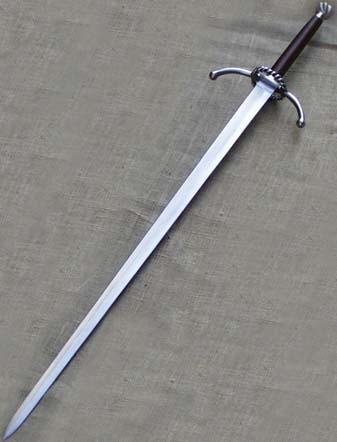
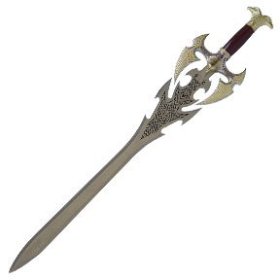
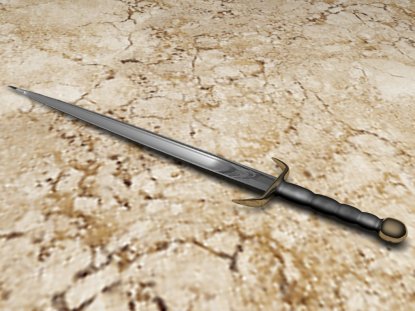
I have had a life-long fascination with bladed objects. That means pretty much everything from an obsidian native American knife to the fictional light-saber of Star Wars. My fascination comes from two directions. First there is the simple fascination of the pure abstract concept of a perfectly thin plane that can slice objects into two pieces. This concept of making two things out of one thing is central to so much of human civilization that we simply take for granted that we have the ability to do so. The second fascination is in the manner in which human beings have pursued that goal of the perfect blade, and the many forms that blades have taken as they have been adapted to different purposes. There is perhaps no single tool that has so thoroughly separated human beings from the animal kingdom. Not even the wheel. In the book Tarzan it is the discovery of a knife that turns Tarzan from a weak, defenseless target into the undisputed King of the Jungle. This symbolism was not accidental. To be human was to wield a blade. Blades permeate our culture to this day. When one nation rouses its military might to cow another nation, we call that "rattling their sabers." (I actually like the "sabre" spelling much better...) When we have a critical decision that is virtually impossible to predict, we call that "balancing on the edge of a knife." I tend to go research things I am interested in, and so I have looked through the history of the blade. Not exhaustively, I'm not writing a dissertation (but perhaps I should...) but with a simple desire to understand the morphology of blades over the years. I was recently in a store in the mall that sold swords and knives. The walls were adorned with blades of the most intricate design. But my eyes were drawn to the simplest designs. While the customers were looking at swords like this one on the wall: swordoffreedom.jpg I thought such a sword looked ridiculous. Such dandified monstrosities remind me of coiffured poodles. If I were such a sword, I would be embarrassed to show myself in public. Instead I found myself appreciating blades like these: sword.jpg bastardsword.jpg Simple, straightforward forms, no unnecessary ornamentation, no fanciful swirls of steel that would mostly just cause blades to jam together during a fight. Simple examples of the pure form of the blade. To this day I just don't feel dressed if I don't have a pocket knife on me. When out in the woods hiking, hunting or fishing, I tend to want something more substantial. On occasion I wonder what life would be like if people still wore swords publicly.
Comments (7)

Dadman
I like the more simple blade forms myself, like Sting, Glamdring and Anduril. I particularly like the ones that glow in the dark when orcs or coonasses are about...
CosmicConservative
I do sort of like the LOTR swords. Glamdring is probably my favorite. But I like Sting too.
CosmicConservative
BTW, I believe that most swords sold in stores like the one I was in are made of stainless steel. That sounds good, except that stainless steel is actually usually a very soft form of steel. High-carbon steel is usually the hardest type of steel. In an actual sword fight the stronger and more flexible the steel is, the more damage it will do to the softer or more brittle steel. In some cases a sword made of better steel can actually cut through or break a lesser sword. In the middle ages there were swords made of steel using a technique from the middle east called "Damascus steel" that were so superior to European swords of the time that they literally could break them in combat. It is no wonder then that some swords became legendary. There were other "secret" methods of making steel which had similar results. Also in Japan they discovered a means of folding steel and pounding it flat again which resulted in amazingly strong swords.
CosmicConservative
Also, just in case anyone was wondering... the groove (or grooves) down the middle of most swords is not there to drain off blood, it is there to reduce the weight of the sword and improve its balance. Most swords were made with a diamond or elliptical cross-section, but that left a lot of unnecessary steel which added weight but didn't add strength. Sword makers realized that they could grind down the middle without significantly reducing the strength of the sword. They also learned how to "hollow grind" the swords, which had the same effect. It is a common misconception that swords, particularly swords like Anduril or Glamdring are supposed to represent, were big, ungainly and heavy things. That was not true. Most well-made swords weighed between 2.5 and 4 pounds, with the most common weight being somewhere in the range of 3 - 3.5 pounds. When balanced properly and wielded by a person trained in their use, they did not feel heavy at all. In general, to a point, lighter swords would typically defeat heavier swords, all other things being equal in the fight. This is why swords evolved into lighter and lighter forms until we have the modern foil or epee which are almost whippy in comparison to more traditional swords. The "sweet spot" for sword fighting is probably the rapier, which is thin and light enough to handle like an epee, but is robust enough (if made of high enough quality steel) to take a blow from a heavier sword without breaking. Epees and foils of today would simply be overwhelmed by a skillfully wielded sword like Glamdring.
Andy
Well, you learn something new every day, huh? Interesting. I didn't know they made swords that glow in the dark around coonasses...might have to get me one of them there blades.
ams182764
Well, for attacking armored men in medieval combat, swords sucked, as far as I've learned. The best swords for that were falcions and very heavily weighted blades towards the top that could be swung with great force. Billhooks and pikes worked better. Maces shocked you no matter how much armor you had on. Swords were better for sticking unarmored men, cutting the peasants down as they ran from the calvary, ect.
CosmicConservative
ams: The sword research I've done indicates that what you are describing is one of the "urban myths" about swords in combat. There are a couple of problems with what you are saying. First, there were rarely large numbers of "armored men in medieval combat." Plate armor is expensive. Very expensive. Plate armor is the most expensive kind of armor there is. Knights who wore it were few and far between. Most battles between armies in medieval days were between men armed with swords, shields, and perhaps some limited amount of chain mail, but most wore armor made of boiled leather. Swords worked quite well against that sort of armor. Against the knights wearing plate mail the sword was not effective. But the answer to that problem was not "bigger, heavier swords that could be swung with more force." The answer to that problem, as you say, was either weapons made to punch through the armor (like an ice pick) or weapons made to deal heavy bludgeoning damage, like a mace. Plate armor was good at stopping cutting damage from a sword, but a well aimed blow with a heavy mace could break bones right through the armor, which would put a knight down where sharp, thin blades (like the stiletto) could finish them off. This is also why the English Longbow was developed. A longbow could put an arrow right through the strongest plate mail. In fact it was the bow that pretty much made plate mail obsolete. Not bigger, heavier swords. Here's a link about how the English Longbow made plate armor virtually obsolete. All the research I have done indicates to me that most of the big heavy swords you find from medieval days were almost universally made for show, not for combat. They were parade weapons, meant to impress the masses. When the real battle came, they rarely saw any use.